
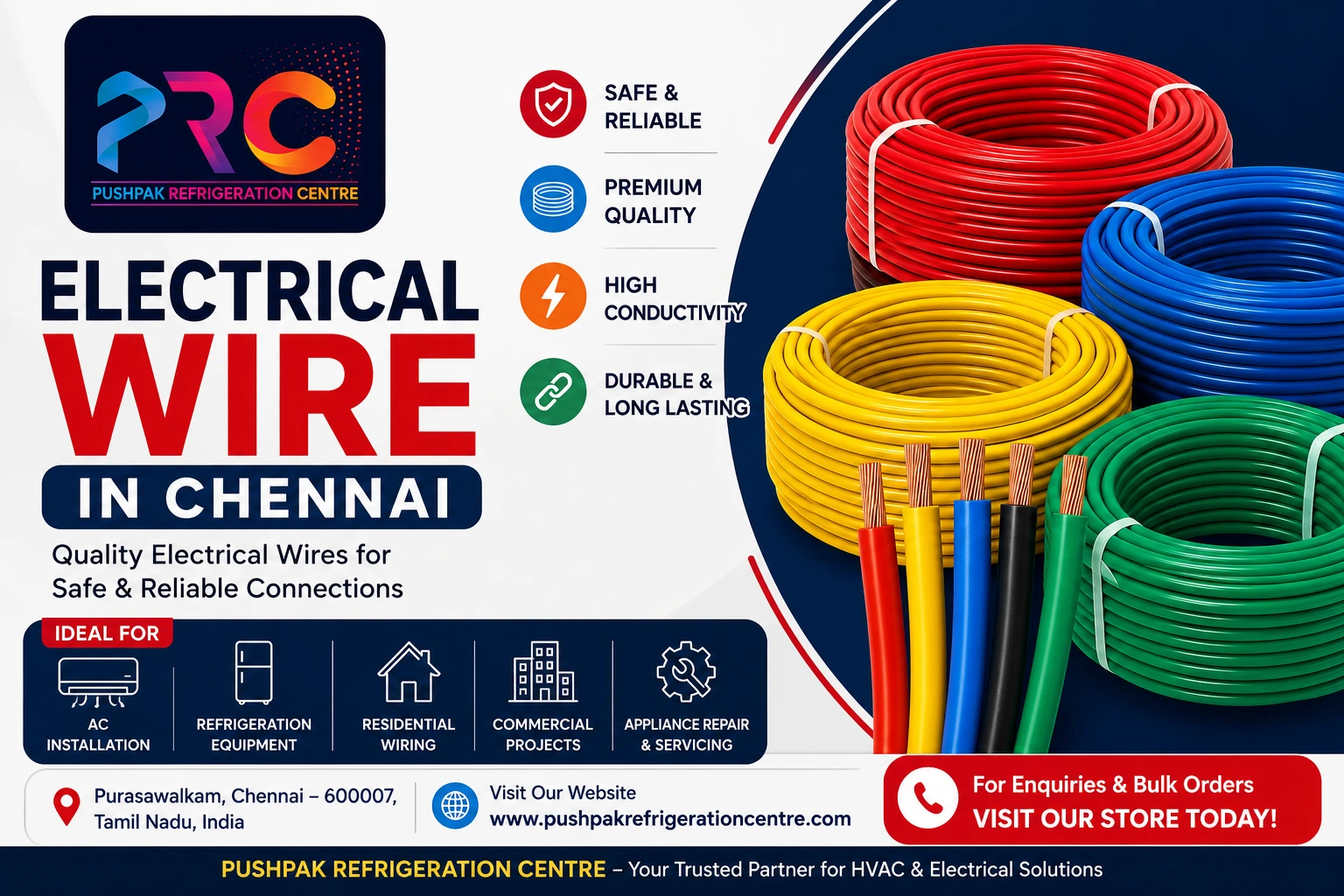
Electrical Wire in Chennai: A Complete Buying Guide for Technicians
Electrical wires are an important part of almost every electrical, air conditioning, and refrigeration system. From AC installations and appliance repairs to commercial projects and general electrical work, choosing the right wire can directly affect safety, performance, and the reliability of the equipment.
For electricians, HVAC technicians, refrigeration professionals, contractors, and service providers, buying an electrical wire is not simply about selecting the right colour or thickness. The conductor material, wire size, insulation, current capacity, flexibility, and intended application all need to be considered before making a purchase.
If you are looking for electrical wire in Chennai, understanding these basic factors can help you choose a wire that is suitable for your particular requirement and avoid common problems caused by incorrect wiring.
Why Electrical Wire Quality Matters
An electrical wire carries current between the power source and electrical equipment. If the wire is not suitable for the required load, it can become overheated or cause voltage-related problems.
Good-quality electrical wires can provide:
- Reliable current flow
- Better electrical safety
- Good insulation
- Reduced chances of overheating
- Better durability
- Stable equipment performance
- Easier installation and maintenance
This becomes especially important when wires are being used for air conditioners, refrigerators, deep freezers, water coolers, and other equipment that may operate for long periods.
Types of Electrical Wires Commonly Used
Different electrical applications require different types of wires. The right choice depends on the equipment, electrical load, installation method, and working environment.
Copper Electrical Wire
Copper wires are widely used because copper has good electrical conductivity and is suitable for many residential, commercial, appliance, and HVAC applications.
They are commonly used for electrical connections, control circuits, equipment wiring, and various installation requirements.
PVC Insulated Wire
PVC insulation provides a protective layer around the conductor. These wires are commonly used in general electrical installations and equipment connections.
The insulation specification should be suitable for the voltage, temperature, and environment where the wire will be installed.
Flexible Electrical Wire
Flexible wires are useful where bending or movement is involved. They are commonly used in appliances, equipment connections, control panels, and certain AC and refrigeration applications.
Multi-Core Wire
Multi-core wires contain multiple conductors within a single cable. They can be useful when several electrical connections need to be managed together, particularly in equipment and control applications.
Common Electrical Wire Sizes
Electrical wires are available in different sizes, and the appropriate size depends mainly on the electrical load and application.
| Wire Size | Common Application |
|---|---|
| 0.5 sq mm | Control and low-load applications |
| 0.75 sq mm | Small equipment and control wiring |
| 1.0 sq mm | Lighting and light-duty applications |
| 1.5 sq mm | General electrical circuits |
| 2.5 sq mm | Higher-load household circuits |
| 4 sq mm and above | Higher-load equipment and specialised applications |
These are general examples only. The correct wire size should always be selected according to the equipment specifications, circuit conditions, applicable standards, and advice from a qualified electrician.
Factors to Consider Before Buying Electrical Wire
1. Conductor Material
Check whether the wire uses copper, aluminium, or another conductor material. Copper is commonly preferred for many applications because of its good conductivity and reliability.
2. Wire Size
Wire size is one of the most important factors when selecting an electrical wire. An undersized wire may heat up when carrying a load beyond its suitable capacity.
The required size should be determined based on current, circuit length, installation conditions, and the equipment manufacturer’s specifications.
3. Insulation Quality
The insulation protects the conductor and helps prevent accidental electrical contact. Check whether the insulation is appropriate for the intended voltage, temperature, and installation environment.
4. Application
A wire used for lighting may have different requirements from one used for an AC, refrigerator, compressor, motor, or commercial refrigeration system.
Always choose the wire according to where and how it will be used.
5. Flexibility
For appliance servicing, AC installation, and equipment connections, flexibility can make installation and routing easier. However, flexibility should not be considered separately from the wire’s electrical specifications.
Electrical Wire for AC and Refrigeration Applications
Electrical wiring is an important part of HVAC and refrigeration work. Air conditioners, refrigerators, deep freezers, water coolers, and commercial refrigeration equipment all require suitable electrical connections.
Technicians may use electrical wires for:
- AC installation
- Indoor and outdoor unit connections
- Fan motor connections
- Compressor-related wiring
- Control circuits
- Refrigerator servicing
- Deep freezer connections
- Water cooler equipment
- Commercial refrigeration systems
- Appliance repair
The exact wire requirement depends on the equipment and its electrical specifications. Using the manufacturer’s recommended wiring and following proper electrical practices is important for safe installation.
Common Mistakes to Avoid When Buying Electrical Wire
Even experienced technicians can face problems when the wrong wire is selected for a particular application.
Some common mistakes include:
- Choosing a wire only because it is cheaper
- Using an undersized wire for a high-load application
- Ignoring the equipment manufacturer’s specifications
- Not checking insulation quality
- Using damaged or poorly stored wire
- Selecting a wire without considering the installation environment
- Making improper electrical connections
- Ignoring local electrical safety requirements
A small mistake during wire selection can create bigger problems later, particularly in equipment that operates continuously.
Signs of Poor-Quality Electrical Wire
Before purchasing electrical wire, it is worth checking its overall condition and specifications.
Some warning signs may include:
- Uneven insulation
- Visible cracks or damage
- Poor-quality outer covering
- Inconsistent conductor thickness
- Rough or damaged surface
- Unclear product markings
- Poor flexibility where flexibility is expected
- Missing product or manufacturer information
For professional work, it is better to purchase electrical products from a reliable and established supplier.
Benefits of Choosing the Right Electrical Wire
| Right Electrical Wire | Unsuitable or Poor-Quality Wire |
|---|---|
| Better electrical safety | Higher risk of overheating |
| Reliable current flow | Possible voltage drop |
| Better durability | Faster deterioration |
| Suitable equipment performance | Equipment-related issues |
| Easier installation | Difficult handling |
| Lower maintenance problems | More frequent repairs |
The correct wire does not necessarily mean the most expensive option. It means selecting a product that matches the electrical and installation requirements.
Electrical Wire in Chennai for Technicians and Contractors
Chennai has a large market for electrical, AC, and refrigeration products because of its residential, commercial, and industrial requirements. Technicians working in areas such as AC installation, appliance servicing, and commercial refrigeration regularly need electrical wires along with other installation materials and spare parts.
When buying electrical wire in Chennai, technicians should focus on the product’s specifications and suitability rather than choosing a wire based only on appearance or price.
For professionals working with refrigeration and air conditioning systems, having a dependable source for electrical and HVAC-related products can also make routine service and installation work more convenient.
Finding Electrical Wire in Tamil Nadu
The demand for electrical products extends beyond Chennai to different parts of Tamil Nadu. Electrical wires are required for homes, offices, shops, factories, HVAC systems, appliances, and commercial equipment.
Whether the requirement is for a small repair or a larger installation project, customers should check the required specifications before purchasing. For specialised AC and refrigeration applications, it is also useful to discuss the equipment requirements with an experienced technician or supplier.
Why Choose Pushpak Refrigeration Centre?
Pushpak Refrigeration Centre is a supplier of AC and refrigeration spare parts and related products in Chennai. The centre caters to the requirements of technicians, contractors, service professionals, and businesses working with air conditioning, refrigeration, and appliances.
Along with electrical products, the centre deals with components and spare parts used for:
- Air conditioners
- Refrigerators
- Washing machines
- Microwave ovens
- Deep freezers
- Water coolers
- Commercial refrigeration systems
For technicians looking for electrical wire in Chennai, discussing the intended application and equipment requirements can help in identifying a more suitable product.
Tips for Buying Electrical Wire
Before purchasing an electrical wire, keep these points in mind:
- Identify the equipment or application first.
- Check the required voltage and current.
- Select the appropriate wire size.
- Check the conductor material.
- Examine the insulation quality.
- Consider the installation environment.
- Follow the manufacturer’s recommendations.
- Purchase from a reliable electrical or HVAC supplier.
- For major electrical installations, consult a qualified professional.
Frequently Asked Questions
1. Which electrical wire is best for general applications?
The appropriate wire depends on the electrical load and application. Copper wires with suitable insulation are commonly used for many electrical requirements.
2. How do I choose the correct electrical wire size?
Wire size should be selected according to current load, circuit length, installation conditions, and equipment specifications. A qualified electrician can help determine the appropriate size for a specific installation.
3. Can electrical wire be used for AC installation?
Yes, suitable electrical wire is used for AC installations and equipment connections. However, the exact specification should be selected according to the AC model and electrical requirements.
4. What should I check before buying electrical wire in Chennai?
Check the conductor material, wire size, insulation, product specifications, intended application, and overall product condition before purchasing.
5. Where can technicians find electrical wire in Chennai?
Technicians can source electrical wires from electrical suppliers, hardware dealers, and HVAC and refrigeration component suppliers such as Pushpak Refrigeration Centre.
Conclusion
Choosing the right electrical wire is an important part of any electrical, AC, or refrigeration installation. The correct wire size, conductor material, insulation, and application suitability can make a significant difference in safety and equipment performance.
For technicians and contractors searching for electrical wire in Chennai, understanding these factors makes it easier to compare products and select the right option for the job. The same approach is useful when sourcing electrical wires for AC and refrigeration applications across Chennai and Tamil Nadu.
Pushpak Refrigeration Centre provides AC, refrigeration, appliance spare parts, and related electrical products for technicians, contractors, and service professionals. By choosing products according to the actual application and electrical requirements, professionals can work more confidently and avoid unnecessary wiring-related problems.
